
Why the Right Underlay Matters More Than You Might Think
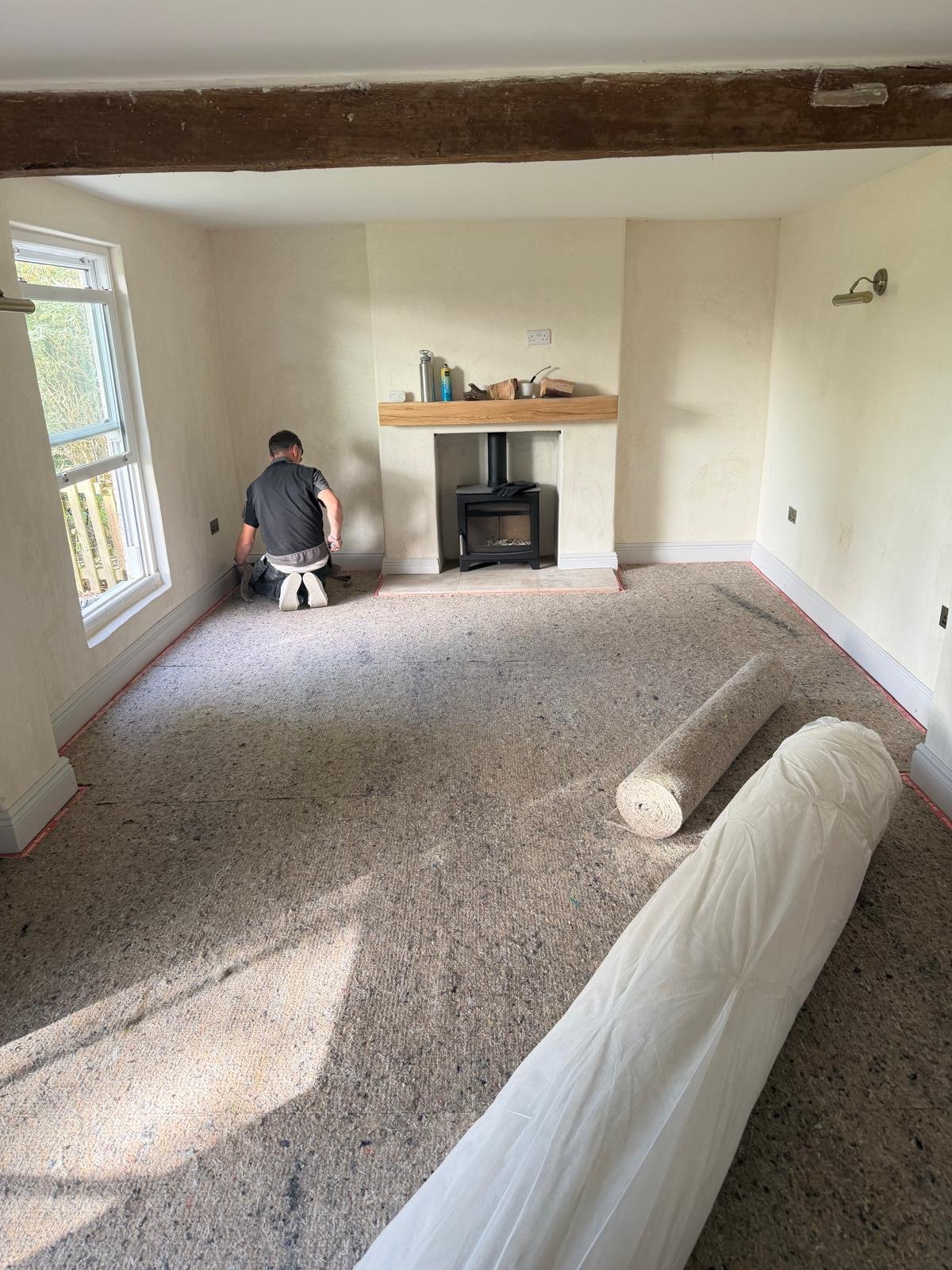
Traditional felt underlay allows the flooring to breathe in this lime plastered cottage
Carpet gets all the attention when a room is finished, yet the layer underneath does just as much of the work. The underlay beneath a new carpet affects how it feels underfoot, how warm and quiet the room is and how long the carpet lasts. In some homes, it even affects how well the building itself can breathe.
James Cottam Flooring treats underlay as part of the job rather than an afterthought, and choosing the right one for each room and each home is something James takes seriously.
What underlay actually does
Underlay acts as a cushion between your carpet and the floor below. Every step is absorbed by the underlay rather than pressing the carpet fibres straight against a hard surface, which helps the carpet keep its shape and wear more evenly over time.
A good underlay also adds a layer of insulation, helping a room feel warmer, and cuts down on noise travelling between floors. Minor unevenness in the subfloor is smoothed out too, giving the finished carpet a neater, more even look.
Why old underlay should come up with the old carpet
Underlay compresses over the years and gradually loses the support it once gave. Laying a brand new carpet on tired underlay means the carpet has less protection from the start, so James recommends fitting fresh underlay whenever a new carpet goes down.
Choosing underlay room by room
The right underlay for a bedroom is rarely the right underlay for a staircase, and James matches the underlay to how each room is used.
Rooms where you spend time relaxing, such as living rooms and bedrooms, benefit from extra softness underfoot. A thicker underlay like Citra 11mm is a popular choice here, adding a generous feel of comfort to a new carpet.
Stairs, hallways and busy family areas are a different story. These spaces take the most footfall, so a firmer, denser underlay such as Sigma 9mm high density gives the carpet the support it needs to cope with heavy daily wear.
Plenty of rooms sit somewhere in between, needing a balance of comfort and support rather than one or the other. Connoisseur 10mm is a good example of an underlay that strikes that balance for everyday rooms around the home.
How the room is heated matters too, particularly in homes with underfloor heating, where the underlay needs to let warmth through rather than hold it back.
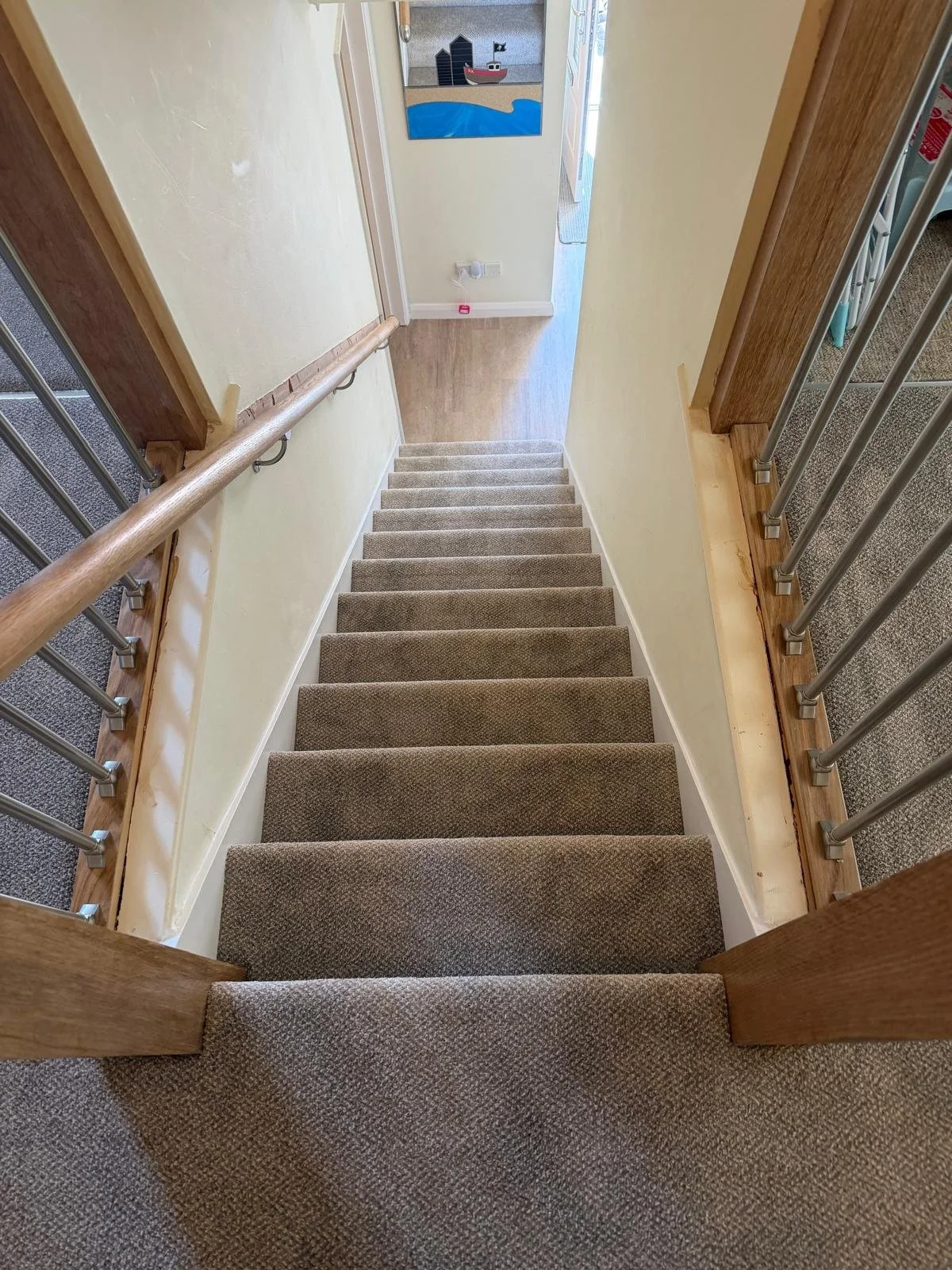
Stairs and high footfall areas need a firmer, denser underlay
Older homes need extra thought
Period properties often behave very differently from modern houses. Many were built with materials such as lime plaster, which lets moisture move in and out of the building naturally. Sealing the floors with the wrong underlay can work against that and lead to sweating and condensation.
James and the team recently fitted carpet from the Abingdon Ultra Stain Free collection in a cottage in Pinchbeck, where English Heritage had advised that the building needs to breathe. A traditional felt underlay was the answer, letting air and moisture pass through while still giving the new carpet a comfortable, supportive base.
Getting it right from the start
The underlay is the one part of a new floor you never see again once the carpet goes down, so it pays to get it right first time. James brings samples to your home, looks at the room and the building, and talks you through which carpet and underlay will suit both the way you live and the house you live in.
James Cottam Flooring has no showroom to run, which keeps overheads down and means those savings are passed on to the customer.
To arrange a home sample visit or a no obligation quote, call 01778 424 288 or email enquiries@jamescottamflooring.co.uk.